
Join Padre Pio Press in Reading Attentively Saint Catherine of Genoa’s short work on Purgatory. Text will be added day by day throughout November
CHAPTER I
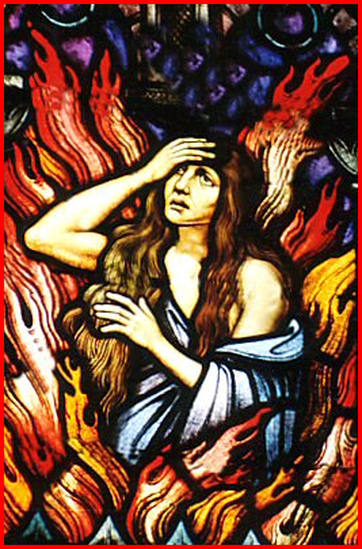
STATE OF THE SOULS IN PURGATORY, HOW THEY ARE FREE FROM ALL SELF-LOVE
This holy soul, yet in the flesh, found herself placed in the purgatory of God’s burning love, which consumed and purified her from whatever she had to purify, in order that after passing out of this life she might enter at once into the immediate presence of God her Beloved. By means of this furnace of love, she understood how the souls of the faithful are placed in purgatory to get rid of all the rust and stain of sin that in this life was left unpurged. As she, plunged in the Divine furnace of purifying love, was united to the object of her love, and satisfied with all that He wrought in her, so she understood it to be with the souls in purgatory, and said:
The souls in purgatory, as far as I can understand the matter, cannot but choose to be there and this by God’s ordinance, Who has justly decreed it so. They cannot reflect within themselves and say, ” I have done such and such sins, for which I deserve to be here; ”
nor can they say, “Would that I had not done them, that now I might go to Paradise;” nor yet say, “That soul is going out before me;” nor, “I shall go out before him.” They can remember nothing of themselves or others, whether good or evil, which might increase the pain they ordinarily endure; they are so completely satisfied with what God has ordained for them, that He should be doing all that pleases Him, and in the way it pleases Him, that they are incapable of thinking of themselves even in the midst of their greatest sufferings. They behold only the goodness of God, whose mercy is so great in bringing men to Himself, that they cannot see anything that may affect them, whether good or bad; if they could, they would not be in pure charity. They do not know that their sufferings are for the sake of their sins, nor can they keep in view the sins themselves ; * for in doing so there would be an act of imperfection, which could have no place where there can be no longer any possibility of actually sinning.
Once, in passing out of this life, they perceive why they have their purgatory; but never afterwards, otherwise self would come in. Abiding, then, in charity, and not being able to deviate therefrom by any real defect, they have no will, no desire, nothing but the will of pure love; they are in that fire of purgatory by the appointment of God, which is all one with pure love; and they cannot in anything turn aside from it, because, as they can no more merit, so they can no more sin.
* The Saint must here be understood to mean that the souls in purgatory cannot recollect the specific reasons of the pains they suffer; that they cannot say, ” I have done such and such sins, for which I deserve to be here.” She cannot mean absolutely that they do not know that the pains they suffer are in punishment for their sins. For besides, such ignorance being scarcely conceivable, it is contrary to her own express statement ir. chap, vii., where she says, that ” that which causes the souls in purgatory most pain, is the seeing in themselves a thing displeasing to God; and the being conscious that it has been admitted against so much goodness.”
CHAPTER II

THE JOY OF THE SOULS IN PURGATORY.
THE SAINT SHOWS HOW THEY ARE EVER SEEING GOD MORE AND MORE.
DIFFICULTY IN SPEAKING OF THEIR CONDITION.
I do not believe it would be possible to find any joy comparable to that of a soul in purgatory, except the joy of the blessed in paradise a joy which goes on increasing day by day, as God more and more flows in upon the soul, which He does abundantly in proportion as every hindrance to His entrance is consumed away. The hindrance is the rust of sin; the fire consumes the rust, and thus the soul goes on laying itself open to the Divine inflowing.
It is as with a covered object. The object cannot respond to the rays of the sun, not because the sun ceases to shine, for it shines without intermission, but because the covering intervenes. Let the covering be destroyed, again the object will be exposed to the sun, and will answer to the rays which beat against it in proportion as the work of destruction advances. Thus the souls are covered by a rust that is, sin which is gradually consumed away by the fire of purgatory; the more it is consumed, the more they respond to God their true Sun; their happiness increases as the rust falls off, and lays them open to the Divine ray; and so their happiness grows greater as the impediment grows less, till the time is accomplished. The pain, however, does not diminish, but only the time of remaining in that pain. As far as their will is concerned, these souls cannot acknowledge the pain as such, so completely are they satisfied with [the] ordinance of God, so entirely is their will one with it in pure charity. On the other hand, they suffer a torment so extreme, that no tongue could describe it, no intellect could form the least idea of it, if God had not made it known by special grace; which idea, however, God’s grace has shown my soul; but I cannot find words to express it with my tongue, yet the sight of it has never left my mind. I will describe it as I can: they will understand it whose intellect the Lord shall vouchsafe to open.
CHAPTER III
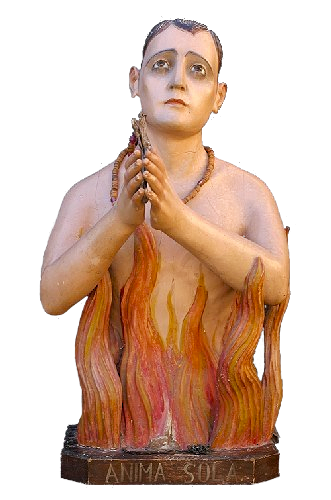
SEPARATION FROM GOD IS THE GREATEST PUNISHMENT OF PURGATORY WHEREIN PURGATORY DIFFERS FROM HELL.
All the pains of purgatory take their rise from sin, original or actual. God created the soul perfectly pure and free from every spot of sin, with a certain instinctive tendency to find its blessedness in Him. From this tendency, it is drawn away by original sin, and still more by the addition of actual sin; and the farther off it gets, the more wicked it becomes, because it is less in conformity with God.
Things are good only so far as they participate in God. To irrational creatures God communicates Himself, without fail, as He wills, and as He has determined; to the rational soul more or less, according as He finds it purified from the impediment of sin; so that, when a soul is approaching to that state of first purity and innocence which it had when created, the instinctive desire of seeking happiness in God develops itself, and goes on increasing through the fire of love, which draws it to its end with such impetuosity and vehemence, that any obstacle seems intolerable, and the more clear its vision, the more extreme its pain. Now because the souls in purgatory are without the guilt of sin, there is nothing to stand between
CHAPTER IV
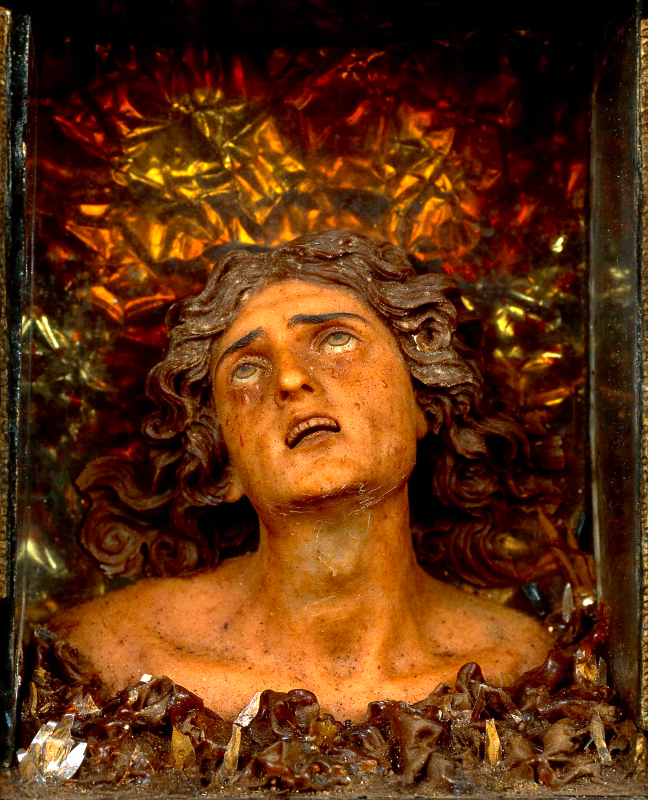
STATE OF THE SOULS THAT ARE IN HELL, AND THE DIFFERENCE THERE IS BETWEEN THEM AND THOSE IN PURGATORY.
REFLECTIONS OF THE SAINT UPON THOSE WHO NEGLECT THEIR SALVATION.
From what has been said, it is clear that the guilt of sin consists in the perverse opposition of the will to the will of God, and that so long as the will continues thus evilly perverse the guilt will continue. For those, then, in hell, who have departed this life with an evil will, there is no remission of sin, neither can be, because there can be no more change of will. In passing out of this life the soul is fixed for good or evil according to its deliberate purpose at the time; as is written, “Where shall I find thee (that is, at the hour of death, with a will either to sin or sorry for sin and penitent), there will I judge thee:” and this judgment is final; because after death the will can never again be free, but must remain fixed in the condition in which it was found at the moment of death. The souls in hell having been found at the moment of death with a will to sin, have with them an infinite degree of guilt ; and the punishment they suffer, though less than they deserve, is yet, so far as it exists, endless.
O misery above every misery! and so much the greater because men in their blindness consider it so little.
The punishment of the damned is not, indeed, infinite in amount; for the sweet goodness of God sheds the rays of His mercy even in hell. A man who has died in mortal sin deserves a punishment infinite in pain and infinite in duration; but God in His mercy has made it infinite only in duration, and has limited the amount of pain. He might most justly have given them a far greater punishment than He has.
O how perilous is a sin committed through malice! for hardly does a man repent of it; and not repenting, his guilt remains, and will remain, so long as there is any affection for the sin committed, or any purpose of committing it afresh.
CHAPTER V
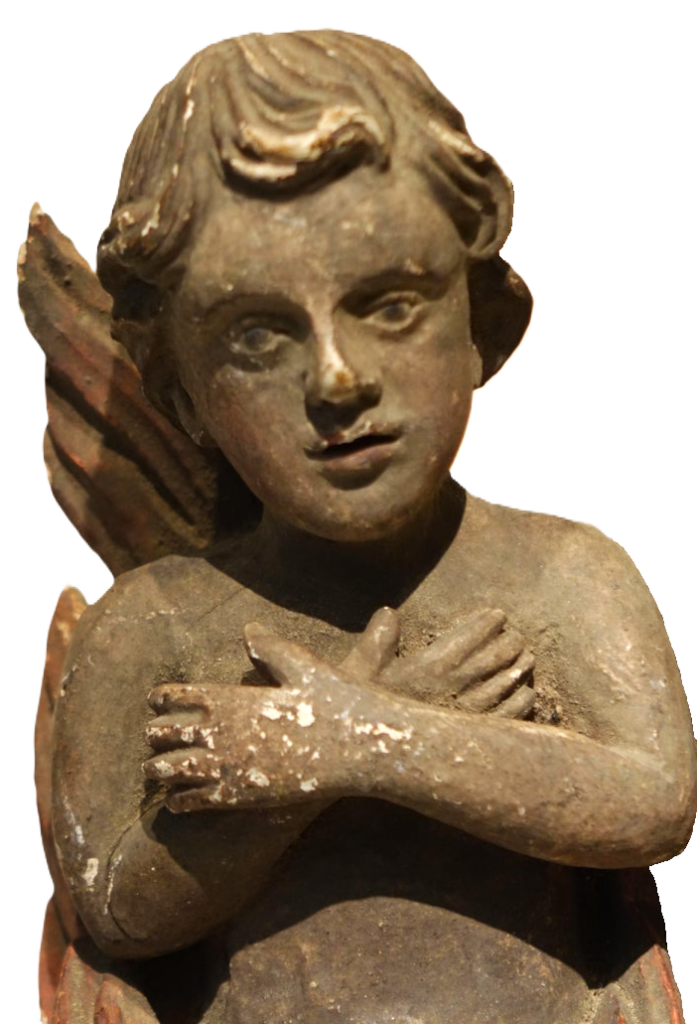
THE PEACE AND JOY OF PURGATORY.
The souls in Purgatory having their wills perfectly conformed to the will of God, and hence partaking of His goodness, remain satisfied with their condition, which is one of entire freedom from the guilt of sin. For when they passed out of this life, penitent, with all their sins confessed and resolved to sin no more, God straightway pardoned them; and now they are as pure as when they were created; the rust of sin alone is left, and this they get rid of by the punishment of fire. Cleansed thus from all sin, and united in will to God, they see God clearly according to the degree of light He imparts to them; they are conscious too what a thing it is for them to enjoy God, that for this very end souls were created. Again, there is in them a conformity of will so uniting them to God, so drawing them to Him through that natural instinct whereby God is, as it were, bound up with the soul, that no description, no figure, no example can give a clear idea of it as it is actually felt and apprehended by inward consciousness; nevertheless I will mention something like it which suggests itself to me.
CHAPTER VI
COMPARISON TO EXPLAIN THE IMPETUOSITY AND LOVE BY WHICH THE SOULS IN PURGATORY DESIRE TO ENJOY GOD.

Let us suppose that there existed in the world but one loaf of bread to satisfy the hunger of every creature, and that the mere sight of it could do this. In such a case a man, having naturally, if in good health, a desire for food, would find himself, so long as he was kept from dying or falling sick, getting more and more hungry; for his craving would continue undiminished, he would know that the bread, and nothing but the bread, could satisfy him, and not being able to reach it, would remain in intolerable pain; the nearer he got to the bread without seeing it the more ardently would he crave for it, and would direct himself wholly towards it, as being the only thing which could afford relief; and if he were assured that he never could see the bread he would have within him a perfect hell, and become like the damned, who are cut off from all hope of ever seeing God their Saviour, who is the true Bread.
The souls in purgatory, on the other hand, hope to see that Bread, and satiate themselves to the full therewith; whence they hunger and suffer pain as great as will be their capacity of enjoying that Bread, which is Jesus Christ the true God, our Saviour and our love.
Latest Posting
CHAPTER VII
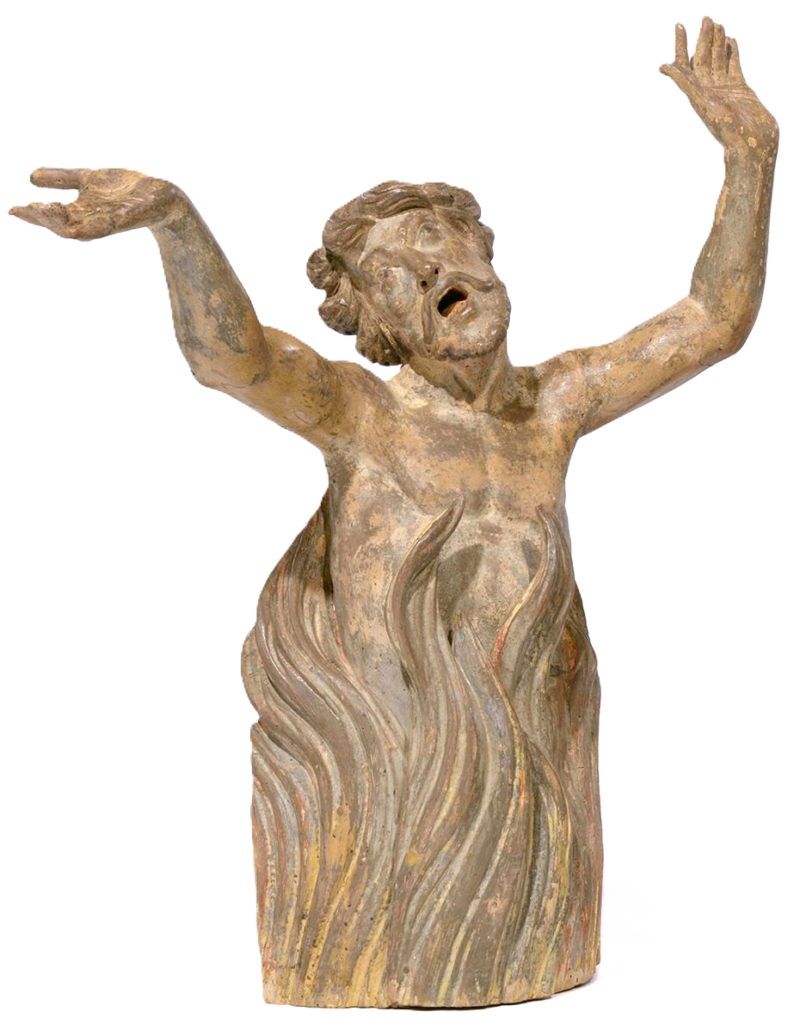
THE WONDERFUL WISDOM OF GOD IN THE INVENTION OF PURGATORY AND HELL
As the soul cleansed and purified finds no place wherein to rest but God, this being its end by creation, so the soul in a state of sin finds no place for it but hell, this being its end by the appointment of God. No sooner, then, does the soul leave the body in mortal sin than it goes straight to hell as to its allotted place, with no other guide than the nature of sin; and should a soul not find itself thus prevented by the justice of God, but excluded altogether from His appointment, it would endure a still greater hell for God’s appointment partakes of His mercy, and is less severe than the sin deserves; as it is the soul, finding no place suited to it, nor any lesser pain provided for it by God, casts itself into hell as into its proper place.
…